
BMI Calculator: Accurate Health & Weight Status
Body Mass Index (BMI) is a vital screening tool used to estimate a person’s body fat based on their height and weight. Our calculator provides instant results for adults and children, while also calculating the Ponderal Index a more accurate measure for exceptionally tall or short individuals.
BMI Calculator
Personalized report will appear here
What is BMI?
BMI is a numerical value intended to quantify tissue mass (muscle, fat, and bone). It serves as a general indicator of whether you have a healthy body weight for your height. While it is not a direct measure of body fat percentage, it is the most widely used diagnostic tool to categorize individuals into weight groups that may lead to health problems.
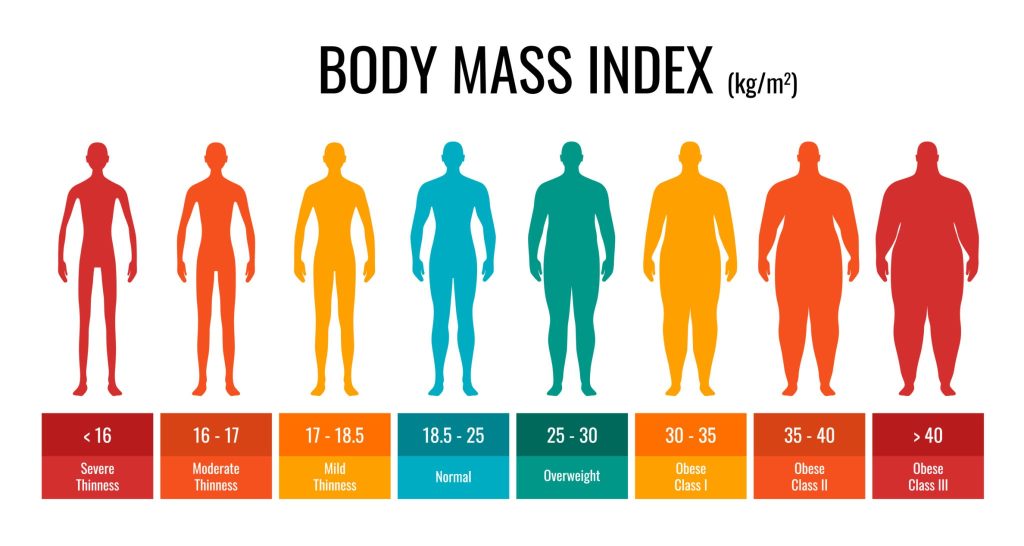
WHO Adult Weight Classifications (Age 20+)
For adults, BMI categories are universal across gender.
| Classification | BMI Range (kg/m²) | BMI Prime |
|---|---|---|
| Severe Thinness | < 16.0 | < 0.64 |
| Moderate Thinness | 16.0 – 17.0 | 0.64 – 0.68 |
| Mild Thinness | 17.0 – 18.5 | 0.68 – 0.74 |
| Healthy Weight | 18.5 – 25.0 | 0.74 – 1.00 |
| Overweight | 25.0 – 30.0 | 1.00 – 1.20 |
| Obese Class I | 30.0 – 35.0 | 1.20 – 1.40 |
| Obese Class II | 35.0 – 40.0 | 1.40 – 1.60 |
| Obese Class III | > 40.0 | > 1.60 |
What is BMI Prime? BMI Prime is the ratio of your actual BMI to the upper limit of “normal” ($25 kg/m^2$). A BMI Prime of 1.0 means you are at the exact upper limit of the healthy range.
BMI for Children and Teens (Ages 2–20)
Unlike adults, children’s BMI must be interpreted relative to other children of the same age and sex. The CDC uses percentiles to determine weight status:
- Underweight: Less than the 5th percentile.
- Healthy Weight: 5th percentile to less than the 85th percentile.
- At Risk of Overweight: 85th to less than the 95th percentile.
- Overweight: 95th percentile or greater.
Health Implications & Risks
Risks of High BMI (Overweight/Obese)
Carrying excess weight significantly increases the risk of chronic conditions, including:
- Cardiovascular Issues: High blood pressure, stroke, and coronary heart disease.
- Metabolic Disorders: Type II Diabetes and high “bad” cholesterol (LDL).
- Physical Strain: Osteoarthritis, sleep apnea, and gallbladder disease.
- Mental Health: Increased rates of clinical depression and anxiety.
Risks of Low BMI (Underweight)
Being underweight can be just as hazardous to long-term health, leading to:
- Nutritional Deficiencies: Anemia and vitamin depletion.
- Bone Health: Increased risk of osteoporosis and fractures.
- Immune System: Weakened resistance to infections.
- Development: Growth delays in children and reproductive complications in women.
The Math Behind the Measure
BMI Formulas
We use the following equations to calculate your results:
1. US Customary System:
BMI = 703 × mass (lb) height2 (in)
2. The Ponderal Index (PI)
The Ponderal Index is often considered a more “fair” measure for very tall or very short people. It accounts for the fact that humans are three-dimensional beings by cubing the height instead of squaring it.
Formula (Metric): PI = mass (kg) height3 (m)
3. International Metric System (SI):
BMI = mass (kg) height2 (m)
Limitations of BMI
While helpful, BMI is an estimate. It does not distinguish between muscle mass and body fat.
- Athletes: May have a “High BMI” due to dense muscle, but very low body fat.
- Elderly: May have a “Normal BMI” but high body fat due to muscle loss (Sarcopenia).
- Ethnicity: Research suggests that health risks may begin at lower BMI thresholds for certain Asian populations.
Frequently Asked Questions – BMI Calculator
BMI is often criticized for being “inaccurate” for athletes because it cannot distinguish between muscle and fat. Muscle is denser than fat, meaning bodybuilders or high-performance athletes in the US and UK often fall into the “Overweight” or “Obese” categories despite having low body fat. For these users, we recommend using our Ponderal Index or a Body Fat Percentage calculator for a clearer picture.
While the formula remains the same, the health systems (like the NHS in the UK and the CDC in the US) use the same primary thresholds ($18.5$ to $25.0$ for healthy weight). However, the UK’s NICE guidelines and Canadian health experts often emphasize Waist-to-Height Ratio alongside BMI to better assess “central obesity” (belly fat), which is a higher risk factor for Type 2 Diabetes.
Despite its limitations, BMI is a globally recognized, non-invasive screening tool. In Canada and the US, it is the “gold standard” for the first level of health assessment because it correlates strongly with metabolic and cardiovascular disease risks across large populations. It serves as a “red flag” that prompts further clinical testing.
Recent research favored by health practitioners in the UK and Canada suggests that for adults over 65, a slightly higher BMI (between 25 and 27) may actually be more protective against frailty and osteoporosis. Always consult with a healthcare provider to determine your personal target range.
BMI remains a primary qualifying factor for weight-management treatments like Semaglutide. Typically, a BMI of 30 or higher (or 27+ with a weight-related condition like hypertension) is the standard threshold used by insurance providers in the US and the NHS in the UK.